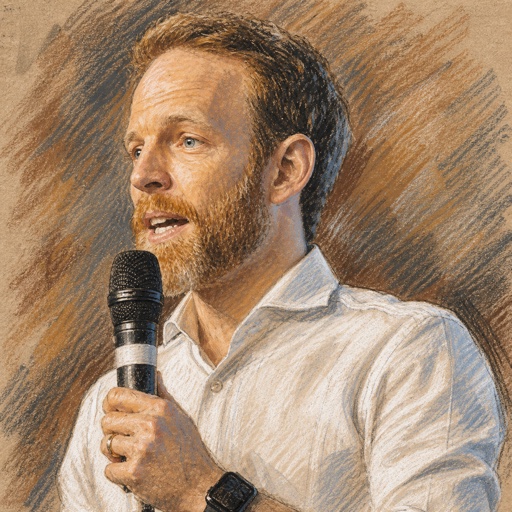
Oliver Stuenkel
@OliverStuenkel · South America
Oliver Stuenkel is followed by Storyz World for research and subject expertise coverage connected to Brazil in the South America chapter.
With Steve Feldstein at the launch of his new book, "Bytes and Bullets: Global Rivalries, Big Tech, and the New Shape of Modern Warfare" (something like "Bytes and Bullets: global rivalries, big tech companies, and the new face of modern warfare"). Steve, my colleague at the Carnegie Endowment, is one of the leading experts in the United States on technology, democracy, and conflict. His previous book, "The Rise of Digital Repression" ("The rise of digital repression"), was already essential reading for anyone who wants to understand how authoritarian regimes use technology to stay in power. In "Bytes and Bullets", he shows how technological innovation has moved from governments to private companies — and how this is transforming geopolitical competition and the very nature of war. Drawing on field research in Ukraine, the Middle East, and Silicon Valley, Steve analyzes how artificial intelligence, autonomous drones, and other technologies are reshaping power in the international system, with technology companies operating increasingly outside the control of states. What interests me most is what these analyses mean for countries such as Brazil, India, and Indonesia, which are seeking a more independent path to expand their strategic autonomy in a world increasingly polarized between the United States and China. As soon as I finish reading it, I’ll post a video here about the subject. Having written several books, I know how difficult it is nowadays to produce a work like this: with everyone connected all the time and a topic that changes every week, writing a book requires rare discipline. Congratulations, Steve!
Translated from Brazilian PortugueseNew AmericasBarometer report finds modest but widespread recovery in support for democracy across the Americas https://t.co/r0uDaB8VxI
Flávio Bolsonaro leads electoral donations with R$ 44 million
Translated from Brazilian PortugueseOil rises and nears US$100 after wave of Houthi attacks against Saudi Arabia
Translated from PortugueseWhy the AfD’s victory is celebrated in Washington, Moscow and Beijing
Translated from PortugueseConservative German newspaper FAZ profiles the AfD's new lawmakers: among them, a porn actor who forged his school certificate, and a man under investigation for being part of a banned antisemitic neo-Nazi group who hosted a pagan ritual with animal horns and Hitler Youth chanting
Translated from PortugueseWhy do so many voters in the former East Germany vote for anti-system parties?
Translated from PortugueseThe far right reached 44% in a German state: how should the other parties react?
Translated from Brazilian PortugueseThe AfD’s slogan nationalism in one scene: in 2021, Tino Chrupalla, AfD co-chair, argued on a children’s TV program that schools should teach more German poetry. The young reporter asked what his favorite poem was. He admitted that none came to mind.
Translated from Brazilian PortugueseWhat should we do when a growing number of voters support a party whose positions are incompatible with the Constitution? My column on the state election in Saxony-Anhalt, Germany, in which the far right surged to 44.5%.
Translated from PortugueseWhy did the AfD, whose main issue is anti-immigration, receive so many votes in a state where only 8% of the people are foreigners, less than half the national average?
Translated from PortugueseThe largest sovereign wealth fund in the world wants to sell off US$80 billion in U.S. Treasury securities
Translated from Brazilian Portuguese'Bukele decides who is a criminal in El Salvador,’ says journalist who had to leave the country after investigating the government's ties to criminals
Translated from Brazilian PortugueseThe first projection, which is usually accurate in Germany, gives the AfD a comfortable victory in the state election in Saxony-Anhalt, in the east of the country. It is at around 44.5% of the vote, nearly 24 points higher than in 2021 and the best result the party has ever achieved. Since 2023, the state’s domestic intelligence service has classified the AfD as “demonstrably right-wing extremist” because the party advocates an ethnic conception of who is German and denies that immigrants and Muslims belong to society on an equal footing. The AfD wants “remigration,” that is, the mass expulsion of foreigners, and an end to sanctions against Russia. Its candidate, Ulrich Siegmund, attended the secret Potsdam meeting in 2023, where a plan for mass deportations was presented. According to the press, he advocated there “pressuring foreign restaurants” and making immigrants’ lives “as unpleasant as possible” so that they would leave. The CDU, the center-right party of Chancellor Friedrich Merz, had governed the state since 2002 and fell to 18.5%. The Left, the socialist left-wing party, received 9.5%, and the Greens 9%. The SPD, the Social Democratic Party and Merz’s coalition partner in Berlin, got 8%. Sahra Wagenknecht’s BSW, which combines a left-wing economic agenda with anti-immigration and pro-Russia positions, entered with 5%. The liberal FDP, with 2%, failed to enter parliament. Without the AfD, a majority exists only if the other five parties, from the CDU to the Left and the BSW, join together. The alternative is to break through the so-called “firewall,” the commitment by all German parties not to govern with the far right. In other words, the other parties will have to choose between such a coalition, a minority government, or bringing the AfD into a state government for the first time.
Translated from Brazilian PortugueseShould Germany ban its second-largest party? The AfD’s advance in Germany reopens the debate about the limits of democratic tolerance — and evokes the tragic consequences of hesitation in the face of Nazism in the 1930s
Translated from Brazilian PortugueseNikolas asks Vorcaro for help and says he “wants more closeness,” according to PF audio recordings
Translated from Brazilian PortugueseMoraes asks Fachin to investigate André Mendonça for abuse of authority
Translated from Brazilian PortugueseNikolas asked Vorcaro for help releasing ore, and the banker said he would pay for his flights, a website reports. According to the report, the lawmaker shows closeness and calls the former banker 'very handsome'.
Translated from Brazilian PortugueseOpinion by @estadao: An appeal to what remains of the Supreme Court The justices who still place the institution above their personal interests are urged to express without fear their horror at the moral collapse threatening the STF
Translated from Brazilian PortugueseCosta Rica is facing a surge in drug violence that threatens to upend the country’s celebrated political system. https://t.co/O7z6PXqXln via @WSJ
An ‘ultra VIP’ lunch at Vorcaro’s hotel sealed a R$131 million deal with Moraes’s wife @estadao
Translated from Brazilian PortugueseDutch central bank moves gold bars out of the United States over ‘geopolitical unrest’ https://t.co/vG1ITibG5C via @ft
Argentine lawmakers try to protect the relationship with Brazil
Translated from PortugueseLula says he personally supports ending betting and suggests “drastic decision”
Translated from Brazilian PortugueseIn 51 messages exchanged over 21 days, Vorcaro made requests, inquiries, demands, and showed “gratitude” to Moraes
Translated from Brazilian Portuguese