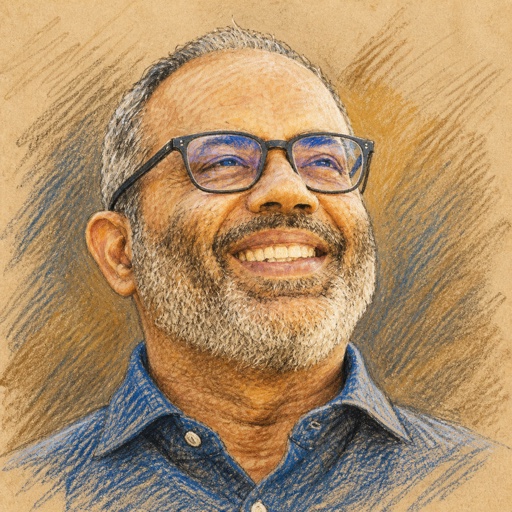
Carlos Lopes
@LopesInsights · Africa
Carlos Lopes is followed by Storyz World for research and subject expertise coverage across the Africa chapter.
Funding reaching Africa remains largely insufficient. The continent received an average of $43.7 billion per year in 2021 and 2022, only about 23% of the needs. Africa needs about four dollars of climate finance for every dollar it currently receives.
Translated from FrenchRegrettable to see the proliferation of attitudes that run against African integration. Kenya has explicit commitments under the EAC Common Market Protocol: free movement of persons and workers, non-discrimination on grounds of nationality, and rights of establishment and residence — including for self-employed economic activity. We cannot champion AfCFTA and the AU’s free movement agenda while borders come down for goods but go up for Africans. https://t.co/lWWEuwHATD
"The resolution didn’t appear out of nowhere. It’s the product of a campaign called “Correct the Map” The African Union, representing all 55 member states, threw its weight behind the campaign on August 14, calling it a major milestone. From there, momentum built quickly toward Friday’s vote at the General Assembly. Carlos Lopes, a professor at the University of Cape Town and one of the campaign’s most visible advocates, could barely contain his excitement once the votes were counted. " https://t.co/QdOJfCuqI0
Africa gets only 23% of the climate finance it needs – and pays too much for it, says Prof Lopes https://t.co/80BkVlr3zX via @TC_Africa
My friend Ha-Joon Chang explaining industrial policy at the IMF: apparently, after decades of structural adjustment, the IMF is finally adjusting itself. 😂 https://t.co/ld6qxx3vfW
Congratulations Namibia! 🇳🇦👏 One of the 10 countries in the world scaling up solar and wind the fastest, according to WRI/Systems Change Lab — in the company of Denmark, Uruguay and the Netherlands. And now Windhoek becomes the global headquarters of the Global Water Partnership. A small country making a very big statement: Africa can lead global transitions. 🇳🇦🌍⚡💧
🚀 This is the Africa we need to talk about! Cape Town’s AI factory is already fully operational — and at full capacity. Now the model is expanding to Johannesburg, Nairobi, Lagos, Cairo and Casablanca. Africa’s data processed on African soil, building African capabilities and serving African enterprises. For too long, we have worried about missing the next technological revolution. Perhaps the more interesting question is: what if Africa helps shape it? From exporting raw materials to producing intelligence. From consuming technology to building the infrastructure behind it. This is what structural transformation increasingly looks like. 🌍⚡🤖 And it is happening now. https://t.co/ajyQ2DJfMb
Congrats to Rabat Business School, Elevating Africa to the top 10 of management schools, according to the Financial Times ⏲️ 👏
"US aircraft manufacturer Boeing forecasts that Africa's commercial aircraft fleet will more than double from 755 aircraft in 2025 to 1,625 by 2045, supported by passenger traffic growth of nearly 6% annually. The expansion is projected to create demand for 22,000 new pilots over the 20-year period, providing a long-term requirement for additional airline training capacity across the continent." https://t.co/5ds8QnoBzs
The first real splash came in 2016, 10 years ago, when my SOAS Centenary Lecture, “How Big Is Africa?”, was unusually hosted at the AU—a packed room intrigued as the cartographic issue was raised there for the first time. Today, the UN has affirmed that cartographic justice must be respected. 🌍🗺️✊🏾 https://t.co/4ADjr6WF3c
164 votes in favour! 🌍🗺️ This is an emotional day for me. After making this case in three books and countless contributions over many years, the world has finally agreed: Africa must be seen in its true size. We did it! ✊🏾🎉 #CorrectTheMap @SelmaHaddadi @rdussey #Togo @_AfricanUnion @africanofilter @mokymakura https://t.co/9XbYz7d5Z5
"Africa cannot industrialize in the same way others have, but “the question is whether it can industrialize in a way that reflects the realities of the present and the possibilities of the future,” Carlos Lopes concludes. It is up to Africans to challenge the myths, overcome the obstacles, and respond to the challenges."
Translated from French@SelmaHaddadi, we made it! 🌍🗺️ What we have argued for so long, and wrote about together earlier this year, is now before the UN. Whatever today’s result, the distortion can no longer be denied. Africa must be seen in its true dimensions. What a moment! ✊🏾🎉 #CorrectTheMap
🌍 For two decades, I have called for maps to show Africa’s true size. Proud to have helped make @AfricaNoFilter and #CorrectTheMap the banner of this movement. Today, the UN votes. Whatever the result, denial is over. Africa can finally be seen as it truly is. ✊🏾🎉🗺️
Africa discovers African money! 😏💰 Tanzania’s $2.9 billion Julius Nyerere dam is being celebrated as a remarkable case of African “self-financing.” And it is impressive. But perhaps the most remarkable thing is that we find it remarkable. 🤔 African governments have long been the single largest source of infrastructure finance on the continent — around 40% in recent estimates. African taxpayers finance roughly 80% of government spending. And Africa sits on more than $1.4 trillions inestable savings that we place mostly outside the continent. 💵🏗️ Yet the dominant story remains: China finances Africa. Europe finances Africa. The World Bank finances Africa. Everyone finances Africa… apparently except Africans. 😂 The real issue is not whether Africa has resources. It is that we export savings, import expensive capital, and sometimes welcome our own money back as “foreign investment.” 🔄💸
Here is a tighter, punchier version with more emojis: Africa discovers African money! 😏💰 Tanzania’s $2.9 billion Julius Nyerere dam is being celebrated as a remarkable case of African “self-financing.” And it is impressive. But perhaps the most remarkable thing is that we find it remarkable. 🤔 African governments have long been the single largest source of infrastructure finance on the continent — around 40% in recent estimates. African taxpayers finance roughly 80% of government spending. And Africa sits on more than $2 trillion in pension, insurance and sovereign wealth assets. 💵🏗️ Yet the dominant story remains: China finances Africa. Europe finances Africa. The World Bank finances Africa. Everyone finances Africa… apparently except Africans. 😂 The real issue is not whether Africa has resources. It is that we export savings, import expensive capital, and sometimes welcome our own money back as “foreign investment.” 🔄💸
📊 “African youth” have spoken! Really? 🤔 🌍 1.4 billion people 🇦🇫 50+ countries 👥 4,901 respondents 🗺️ only 16 countries 📍 roughly 300 per country And voilà 🪄 — sweeping conclusions about what “African youth” think of Trump. A sample can tell us something. Pretending it speaks for a continent tells us something else. 🙃 This is a disservice to serious communication about Africa. https://t.co/sOtBLAaFK3