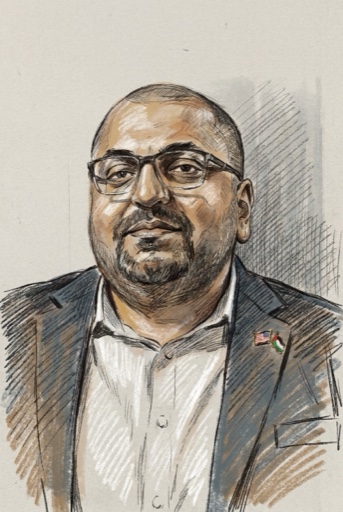
Ahmed Fouad Alkhatib
@afalkhatib · Blízký východ
Ahmed Fouad Alkhatib patří mezi osobnosti, které Storyz World sleduje kvůli tématům byznysu a občanské společnosti v kapitole Blízký východ. Země, k níž se sledování vztahuje: Palestinská území.
Hamas’s leader Sinwar warned Netanyahu about October 7? A new investigative piece by Haaretz has turned the world upside down overnight, but its claims are shaky, contradictory, and in several places simply implausible. It opens with the dramatic assertion that UAE President MBZ warned Netanyahu in September 2023 about Hamas preparing something violent against Israel, risking the destabilization of the region. From there, it veers into far more expansive claims: Israel-Hamas talks to “lift the blockade” through a prisoner swap were allegedly taking place, a supposed message from Sinwar to Netanyahu via UAE-based Palestinian strongman Mohammed Dahlan intermediaries threatened an “earthquake” if Israel didn’t proceed to make a deal with Hamas, and claims that after the 10/7 attack, the terror group offered the “unconditional” release of Israeli civilian hostages shortly after abducting them into Gaza. Here are some thoughts and reactions to the piece: 1. It is likely true that the UAE president warned Netanyahu about intelligence gathered by Emirati services and figures close to Abu Dhabi, including Dahlan, who had maintained contacts with Hamas for years before October 7 after the group reconciled with the controversial Palestinian strongman as part of its effort to counter Palestinian Authority President Mahmoud Abbas. Still, according to the Haaretz report, it appears the warning was nonspecific and sufficiently vague so as not to warrant any particular action. Just as Netanyahu reportedly disclosed his UAE visit during the US-Israeli war with Iran, angering Emirati officials, Abu Dhabi may now be returning the favor by leaking this information a month before a consequential Israeli election in which Netanyahu's political survival is at stake. 2. Israel was interested in a long-term truce with Hamas in Gaza. That was partially why it allowed monthly Qatari cash transfers to the terror group, issued 20,000 work permits for Gazans to work in Israel with plans to expand the program, and supported other economic initiatives aimed at improving conditions in the territory. However, the claim that the release of the two Israeli soldiers' bodies from the 2014 war and the two Israeli civilians held by Hamas would have led to the lifting of the blockade is simply not credible. The blockade was structured in a way that made its full removal impossible while a heavily armed terrorist organization with a vast tunnel network remained in control of Gaza. Hamas faced Arab, regional, and international restrictions and sanctions because of its militant ideology and record of violence; no temporary arrangement or “hudna” with Israel would have fundamentally changed that reality. As long as Hamas governed Gaza, a complete lifting of the blockade was never a realistic prospect. 3. The allegation that Hamas genuinely wanted to release the Israeli civilian hostages it captured on October 7 but was prevented from doing so by Israel or then-US Secretary of State Blinken is a false claim the group has repeatedly used to deflect responsibility. Hamas did not offer their unconditional release. As described in the Haaretz report, it wanted any release to occur through an intermediary who could shape the framework for subsequent hostage release negotiations, which by definition was conditional and difficult to reconcile with the chaotic aftermath of the attack. Hamas also adopted a broad definition of who qualified as a non-civilian hostage, often treating virtually any Israeli between 18 and 60, including women, as a soldier. If it had truly wanted to free Israeli civilians immediately, practical options existed. It could have coordinated with Egyptian intelligence and transferred civilian hostages to the Rafah border crossing and handed them over for safe return to Israel. Instead, Hamas quickly escalated its demands, murdered multiple civilian hostages, and held others for hundreds of days. The claim that it had no realistic way to release civilians shortly after their capture defies logic and raises a more basic question: if they were not intended as bargaining chips, why were they taken at all? 4. Approximately two months ago, Prime Minister Netanyahu halted progress on an Emirati-financed, Dahlan-influenced community planned for western Rafah in southern Gaza (beyond the Yellow Line), despite months of work by the Board of Peace and approval from Israeli military and intelligence officials. His last-minute reversal generated frustration among the Board of Peace, the UAE, and Dahlan. Given this context, the timing of the release of the Haaretz piece and references to Dahlan’s man "Coal Eyes" may reflect an effort by Dahlan and a coalition of Arab and Western actors to weaken Netanyahu ahead of a pivotal election that could shape both Israel's future and the broader trajectory of the Middle East. 5. This piece has been extraordinarily damaging, amplified across much of the “pro-Palestine” movement, the pro-Hamas camp, and circles eager to minimize Hamas's responsibility for the October 7 massacre that precipitated the worst catastrophe in modern Palestinian history. Many Israeli leftists, anti-Netanyahu journalists, and activists are so focused on defeating Netanyahu politically that they often portray him as the central culprit behind October 7, at times relegating Hamas, the actual perpetrator of the attack, to a secondary role. The article has fueled conspiracy theories that Netanyahu knowingly allowed October 7 to happen to justify a campaign of "genocide" in Gaza. More broadly, the debate surrounding the piece has further eroded any sense of Palestinian agency, responsibility, or accountability, with some even advancing the claim that Hamas effectively tried to warn Netanyahu about the attack but was ignored, forcing it to launch the attack – almost reluctantly. 6. The idea that Hamas would warn Netanyahu and sacrifice the element of surprise is extremely implausible. Before October 7, Hamas's capabilities remained fundamentally asymmetric, making the element of surprise essential to offset Israel's overwhelming military advantages. It is difficult to believe that Sinwar would have deliberately alerted Israel to the possibility of an operation of October 7's scale just weeks before launching it, particularly given reports that Hamas started planning it in 2022. 7. While ultimately a loathsome and criminal figure, Netanyahu was often defined more by caution than by hawkishness. Before October 7, many Israelis criticized him as indecisive and reluctant to take bold military action. He was grappling with unprecedented domestic unrest over his judicial “overhaul,” pursuing Saudi-Israeli normalization, trying to preserve the Abraham Accords, and struggling to hold together a fragile coalition that included far-right figures like Ben Gvir and Smotrich. Above all, he wanted to keep Gaza quiet while violence was rising in the West Bank and Iran's nuclear program remained a growing concern. That desire for calm at almost any cost likely contributed to the catastrophic negligence that preceded October 7, ignoring multiple warning signals, rather than a deliberate effort to let an attack happen and trigger a war to be used as a political pretext. His resistance to a full investigation of October 7 failures is more plausibly explained by a desire to avoid scrutiny of that negligence, potentially even criminal negligence, than by evidence of a broader conspiracy. Consider the timing of this piece; consider who’s enthusiastically attempting to absolve Hamas of its responsibility; consider the illogical framing of some of the points being raised; and consider the possibility that while some nuggets of truth may exist in this exposé, there are forces at play very interested in manipulating perceptions of the pre-October 7 reality in which Hamas was deeply unpopular, hated, without options, and run by two psychopaths (Sinwar & Deif) who gambled away the lives and future of two million Palestinians.
Hi Mehdi – good of you to unblock me on Twitter a month ago after blocking me 2 years ago for I don’t know what reason. If you recall, soon after dozens of my family members were killed in Gaza in Israeli airstrikes, I messaged you and asked for your help in elevating my voice and telling their story, but you ignored me completely. I see you’ve been talking to Peter Beinart, and I had wanted to respect that he reached out to me privately 2 days ago, but since he’s spilling the beans, I’ll take the liberty of telling you what I told him. I fail to understand why an anti-Zionist Jew, and in your case, an Indian-British man, see yourselves as the most suited arbiters or facilitators for such conversations. I don't get the point of having a debate with other Palestinians with someone like yourself being a moderator. Why can’t you speak with me, and you’re welcome to speak with any of the others on your own time? I told your producer that I don’t want a debate, but rather a discussion and conversation, one that is elastic and doesn’t necessitate a “winner” and “loser,” but creates an opportunity for mutual learning and exploration. It seems that this has never been your interest, and your whole shtick is trying to ambush, dogpile, and play your clever, manipulative gymnastics to make a point, not make a difference. The points of view that most of your supremely “representative” Palestinians guys want to yell and scream at me are staples in the "pro-Palestine" industrial complex, so ubiquitously stated and repeated as part of a stale and useless diet for all to feast on. Though I speak for myself, my perspectives are rarely heard even though they are so prevalent among so many Gazans, the majority of whom are singularly focused on Hamas and blame it for their misery, both contemporarily and historically. Therefore, I'm not interested in talking to your pals - what I would be interested in is having a 1-on-1 conversation with you about the New York Times article and other topics that we can raise relevant to Gaza’s conditions and pathway forward. Please stop this elitist and horrifically pompous attitude that you, Peter Beinart, and countless others display as if you are the “truth tellers” when it comes to Israel and Palestine or as if you can proclaim who is a real or authentic Palestinian. Palestinians and their views/opinions are so deeply divided between Gaza, the West Bank, East Jerusalem, inside Israel, Arab & Muslim countries, and the Western world. The few Palestinians that you and Beinart love to salivate over are ultimately an irrelevant drop in the ocean. If you want to kill a civilization, Mehdi, keep suppressing opposition and dissent like you’re doing – seemingly to gather likes and shares on social media. I hope you’ll change course.
In a new opinion piece for the Forward, How Hamas still holds Gaza captive, I describe the stalemate in Gaza, Hamas's vile criminality, the dehumanization of Gazans, the normalization of Hamas's narratives and offer a plea to the "pro-Palestine" community. https://t.co/UyH7ycVEdv
An excerpt from "To Save Gaza, Resist Hamas": While many play verbal gymnastics to mask support for Hamas, or resist calls to denounce them, the rhetoric makes that support clear. Efforts by university administrators, the media or members of the public to push back against this devolution by pro-Palestinian activists were met with cries of censorship. Despite this obfuscation, the boundary between solidarity with the Palestinian people and endorsement of their Palestinian oppressors dissolved. As the horrors continued, the people of Gaza made it clearer, despite repression from Hamas, that they were disgusted with the group and wanted it out. There were several rounds of anti-Hamas protests during the war calling for the group to stop the disaster it began, to leave Gaza and release the hostages. Opposition to Hamas’s torture, extremism and failed governance has been strong and present for years. There were mass protests against the group in 2023 before Oct. 7, and in 2019 and 2017, sometimes under the banner of “We want to live.” Hamas brutally suppressed those demonstrations. The people of Gaza clearly did not matter to those claiming to champion Palestinian lives. Two months ago, 44 percent of American Muslims surveyed by Pew Research said they had a favorable view of Hamas, a number I believe understates the true level of support among Arab and Muslim diaspora communities. I cannot enter a mainstream Arab, Muslim or Palestinian American space and critique Hamas meaningfully without facing backlash or outright hostility. Hamas is now facing a humiliating defeat. Despite Israeli rejection of the initial phased disarmament framework, Hamas acquiesced to the Board of Peace’s demands. All the devastation was for nothing. Large segments of the pro-Palestinian community and Western left bet on a losing horse and embraced a rotten resistance narrative now invalidated by Hamas itself. The last thing Palestinians need is more denial from the left. The Palestinian national project has a rare chance to evolve toward nation-building, peace and coexistence alongside a Jewish Israel that is not about to be exterminated. Chants of “from the river to sea” and the like are destructive conceits.
- @nikitabier @elonmusk isn't it time that anonymity is no longer afforded to big accounts engaged in liberate and willful defamation, malice, and disinformation, with hundreds of thousands of followers being incited to violence and act against a real life person? Please end this
A bizarre alliance to shield Hamas? Zachary Foster, one of the biggest clowns and least informed or compelling commentators in the Israel and Palestine space, and a living demonstration of how “anti-Zionism” has devolved into cultism, launched into a hate- and insult-filled tirade against me after I published an op-ed in The New York Times. He is frothing at the mouth with deranged language and rage, regurgitating incoherent talking points to say that Hamas are the valiant, amazing angels of reasonable compromise, and Israel is the evil root of all ills in Gaza; the predictable low-grade commentary one has come to expect from unhinged oracles of the “pro-Palestine” industrial complex. This is especially true of certain Jews who now express a violent rebellion against Zionism and Israel, due to feelings of guilt or “they lied to me at summer camp” vibes that many anti-Zionist Jews frequently express. Hilariously, the post was immediately reposted by Hamas’s chief lawyer in Europe, Ramy Abdu, who started the fake “EuroMed Monitor for Human Rights,” and another voice strangely obsessed with shielding Hamas from accountability and blame for Gaza’s destruction and the devastation of Palestinian national aspirations and hopes. Isn’t it ironic: an anti-Zionist Jew, a Hamas lawyer, and a firebrand in journalism, all in a furious frenzy to delegitimize me and my arguments – and ultimately, protect Hamas.
The Nazification of the so‑called “pro-Palestine” movement is no exaggeration. Large segments of this conglomerate have turned what should be a moral cause into an exceptionally hateful, racist, antisemitic, homophobic, and toxic ecosystem of low‑information activists, journalists, academics, and online personalities. Since my New York Times opinion piece, “To Save Gaza, Resist Hamas,” I have been targeted by a global smear campaign driven by Hamas, “pro-Palestine” fascists, antisemites, racists, and deeply disturbed individuals with hundreds of thousands of followers. They have circulated AI‑generated images and fabricated posts claiming I am Jewish, an Epstein‑connected agent blackmailed by Mossad, a closeted gay man, and a paid influencer funded by Israel (I am none of those things, in case you are curious). This is happening at the same moment other corners of the “pro-Palestine” industrial complex are calling a Black member of Congress a “monkey” and a “boy.” Add to that the meltdown among supposed journalists, academics, and influencers who clearly did not read the op‑ed and reacted only to the title, furious that I criticized Hamas, their favorite “resistance” Islamist fascist group in Gaza, or that I refused to place all blame for the coastal enclave’s problems on Israel. The backlash actually proves my central argument in this piece. Many in the “pro-Palestine” industrial complex refuse to engage with complexity around Gaza, Hamas, and Palestinian agency and responsibility, even within the reality of Israel’s overwhelming power advantage. By personalizing their reactions and resorting to insults instead of substance, including my explicit critique of Israeli policies, they are doing exactly what I argue must change. Palestinians and their allies can criticize Israel as much as they want, but fantasies about Israel’s destruction are neither moral nor pragmatic. Most critically, no one holds a monopoly on what counts as a legitimate Palestinian viewpoint. Palestinians are diverse, their opinions are deeply fragmented, and many in Gaza are furious with Hamas’s narratives and actions, a reality ignored by externally based Palestinians and non-Palestinians in the “pro-Palestine” industrial complex. It is time to delegitimize, call out, resist, and dismantle the current “pro-Palestine” movement and build an entirely new apparatus that rejects the hateful, bigoted, racist, homophobic, Jihadi, violent, and antisemitic voices that have become mainstream within this failed environment.
Imagine [hopefully] reading a piece that calls for Gaza to become the pride and joy of the Palestinian people and a hub of compelling Palestinian national identity by rejuvenating the territory, embracing peace, and rejecting a terror organization that admitted to refusing Gaza development offers worth billions, including an airport and seaport, only to proclaim that the op-ed is "pro-genocide." And how was this brilliant conclusion reached? Because the article I published in The New York Times didn't do the ubiquitous "everything has to be Israel's fault" that seems to be the only line of thinking within the supposed "pro-Palestine" camp. Speak to Palestinians in Gaza who aren’t Hamas or making content for the “pro-Palestine” community abroad, and you hear the same thing again and again. They describe, plainly and without theatrics, how Hamas halted Gaza’s development and crippled the broader Palestinian national project since its founding in 1987. They do not need to mention Israel in every sentence to sound authentic to outsiders, including other Palestinians or non-Palestinians alike. They simply recount their lived reality. For Gazans, Hamas is the central problem. There were no Israeli soldiers inside Gaza before October 7. The blockade that everyone loves to speak about was imposed after Hamas’s cross‑border abduction of an Israeli soldier in June 2006 and tightened after the group’s violent takeover of the territory on June 14, 2007. From that point forward, Hamas massively built tunnels, fired rockets, smuggled weapons, waged repeated rounds of conflict, and declared its intent to “destroy” Israel, while turning Gaza into a fortress of armed “resistance” that got Gaza destroyed, tens of thousands killed, millions displaced, and wasted billions of dollars. Hamas imposed punishing taxes on Gazans to fund its terror; stole diesel from Gaza’s only power plant and caused chronic power outages; suppressed women’s freedoms; blocked travel for anyone it disliked; and routinely killed, tortured, jailed, beat, and humiliated countless Gazans. Research the political and cultural divides between Gaza and the West Bank, and you quickly see how many Gazans resent West Bankers for cheering Hamas and October 7. These dynamics are complex, real, and central to understanding Palestinian politics, yet they are brushed aside or overlooked to satisfy low‑information audiences who consume the toxic narratives produced by the "pro-Palestine" industrial complex. Some people are simply uninformed. Some are unsophisticated. And then there are those who know exactly what they are doing and deliberately twist, manipulate, and distort reality to manufacture ignorance and maintain obedience and Orwellian-grade compliance among the crowds.
I'm sure you're able to read & caught the title of the article & the substance which is about Gaza, not the West Bank. Plus Hamas's actions for 3 decades empowered anti-Palestinian forces within Israel who play a role in what's happening in the West Bank now. Please read/re-read.
Hamas spokesman Hazem Qassim issued a statement attacking my New York Times op‑ed and denouncing the Board of Peace and the U.S. State Department for sharing it. Just four months ago, the terror group’s Politburo senior leader, Basem Naim, also incited against me, calling me a “suspicious individual” after I exposed his group’s obstruction of efforts to improve Palestinian lives. In its new statement, Hamas accuses the U.S. government and the Board of Peace of promoting “incorrect information and biased opinions” against the “resistance,” and absurdly claims that my op‑ed and the Board/DOS resharing “adopt” the Israeli narrative. Hamas is clearly irritated that anyone notes its acceptance of the Board of Peace’s disarmament demand, even though the group has in principle agreed to disarm. It is time for Hamas to be honest. Are you actually willing to give up your weapons, and therefore ready for Palestinians to ask what the last four decades, from 1987 to October 7, were for? Or are you now backing away from disarmament and simply trying to suppress any article or statement that exposes that fact? Hamas is panicking that its narrative is being challenged like never before and is fully cognizant that Palestinians in Gaza are ready for something fundamentally different. The age-old tactic of simply blaming everything on Israel no longer works on Gazans, though it still works for the “pro-Palestine” industrial complex in the United States and Europe, including supposed journalists, academics, experts, famous and online personalities, and low-information activists. Read what the Board of Peace shared and tell me this isn’t exactly what genuine pro-Palestine sentiment looks like: “In the next decade, Gaza should become the pride of the Palestinian people and the crown jewel of Palestinian national identity. Gaza must become a model of effective Palestinian self-governance, strengthening confidence among allies and Israel that Palestinian aspirations center on freedom and prosperity, rather than Israel’s destruction. To achieve this, Gaza needs to be reimagined so it is no longer sustained by an NGO complex or a refugee framework. Gaza will need deep deradicalization across schools, mosques, media and public language to cultivate and produce builders and creators.”
Hamas terrorists are beautiful "genocide victims," said their "human rights lawyer" Ramy Abdu in Europe. To give people a sense of who the terror organization dispatched to launch a counteroffensive against me for the New York Times op-ed I published today, this is what he posted two weeks ago. He shared an image of a Hamas terrorist whom Israel had eliminated and proceeded to claim that Israeli propaganda is deliberately making “Palestinian resistance fighters” look ugly and savage as a form of racist stereotyping. Of course, Abdu was too busy praising October 7 and didn’t bother looking at the actual savagery from his favorite “resistance” terrorists on that fateful day that ushered in the worst catastrophe in Palestinian modern history. He urged his followers to exercise “caution” when sharing images of “genocide victims” whose footage might be manipulated by artificial intelligence to make them look ugly, I suppose instead of their beautiful selves. This is a clear admission that Hamas and its lawyer networks, with Ramy Abdu chief among them, have been counting dead terrorists as “genocide victims” when they should be counted as militants in a war that they and their movement started on October 7.
Hamas just dispatched Ramy Abdu, its chief lawyer in Europe, to attack my New York Times op‑ed. He runs “Euro‑Med Human Rights Monitor,” the biggest and most sophisticated front operation Hamas has ever built. It is a fake “rights” group in the heart of Europe designed to launder Hamas narratives and operate through the same networks that produced Abdu from Gaza. He is doing exactly what his Jihadi handlers expect: flood the zone with emotionalism, repeat “Zionist” and “Genocide” nonstop, bury facts, smear anti‑Hamas Gazans as treasonous puppets of Israel, and enforce discipline among the pro‑Palestine foot soldiers so the focus never shifts from Israel. Major media outlets have unfortunately legitimized him by citing Euro‑Med’s fabricated data, even though the group has been thoroughly exposed as a polished cover for a terrorist organization responsible for severe harm and human rights violations. If you want to understand how Hamas’s propaganda became mainstream, look at “lawyers” like Ramy Abdu in Europe.
In an op-ed for The New York Times, I argue that saving Gaza & its Palestinian people requires resisting Hamas, weaving in personal themes, addressing issues with the Left & "pro-Palestine" movement & proposing a vision for Gaza's future Transformation. https://t.co/X4OCVETl8M
Hamas’s fascist militias attacked civilians in Khan Younis today, shooting, wounding, and kidnapping several, then retreated straight into the Nasser Hospital Medical Complex, where they’ve built torture rooms and interrogation chambers in full view of UN agencies and international NGOs. And still, the “pro‑Palestine” industrial complex won’t say a word. Not Hasan Piker, not the DSA, not SJP or AMP, not the activist mobs, influencers, journalists, Hollywood names, singers, members of Congress, or Senate candidates. None of them will touch the fact that Palestinians are being brutalized by Palestinian oppressors like Islamist terrorists such as Hamas, throughout Gaza and especially inside Gaza’s hospitals - because for them, Palestinian lives only seem to matter when Jewish Israelis are involved. Tell the truth - is that not the case? Am I wrong?
Israel’s Defense Minister Katz is once again recycling the same empty election‑season lines about expelling Gaza’s population and claiming he is arranging pathways for Gazans to leave if another country accepts them. He drags President Trump into the fantasy even though the United States made clear in the October 2025 ceasefire that Palestinians are meant to remain in a rebuilt and revitalized Gaza. Yes, many Gazans have voiced a desire to leave after years of Hamas’s rule, despair, war, and destruction. But many more want to stay. Gaza is their home, their memory, or the place they hope will finally become something better. Israeli politicians pushing expulsion are not speaking about welfare or safety. They are indulging a vision of erasure that is fascistic and despicable. I and many others have repeated the same principle: any Palestinian from Gaza who wants to leave and has a destination deserves safe passage and the right to return. Those who stay deserve the chance to build new lives beyond Hamas, beyond radicalization, and beyond permanent Israeli military control. If Israel’s legitimate security needs are met, then Katz, Ben Gvir, Smotrich, Netanyahu, and others have no right or credibility to speak about draining Gaza of its people under the disguise of voluntary migration. The trauma of October 7 is real and understandable. And, it does not justify rhetoric that treats forced displacement as an acceptable solution.
Gaza’s deradicalization requires rewiring the public lexicon; the names, symbols, and everyday language that seep into Palestinians’ subconscious. Hamas has spent two decades socially engineering a society around “resistance” and militarism, saturating public space with violent imagery that corrodes civil life and the norms of tolerance and peace. When I was growing up, a street near our home was casually called Nafaq or “Tunnel” street. Later, Hamas built roundabouts featuring rockets, drones, and mock Israeli tanks, and named countless streets after “martyrs” killed in battle. Entire areas were labeled with warfighting terms: “Brigades,” “Company,” “Battalion,” embedding militarism into the geography itself. This must end. Any serious deradicalization effort has to dismantle this linguistic and symbolic architecture as part of reconstituting Gaza toward nation‑building and away from the armed “resistance” narrative Hamas entrenched across the Strip.
What's next after the daring Israeli raid to abduct a senior Hamas security official yesterday (Mo'in al‑Arabid, head of the Internal Security Service/Secret Police), and why did Prime Minister Netanyahu visit Gaza's perimeter today? What's next for disarmament & the population? https://t.co/J5622bKLMl
Gaza received more per‑capita aid and development funding than any conflict zone on earth for nearly twenty years; yet vast NGO and charity networks ultimately helped Hamas entrench its rule, culminating in the October 7 disaster. I explain how this system took shape, how it enabled Hamas and why the pro‑Palestine and NGO industrial complexes ended up harming Gazans rather than serving them. "Ask Haviv Anything" @havivrettiggur
An Israeli raid inside Gaza’s Hamas‑controlled “red zone” resulted in the capture of Mo'in al‑Arabid, the head of Hamas’s Internal Security Service. Al‑Arabid has long been tied to some of the group’s worst abuses against Palestinians: torture, intimidation, disappearances, executions, extortion, all carried out through Hamas’s secret police to maintain its authoritarian grip on Gaza. He also oversaw the operational security architecture that protected both Hamas’s regime and its al‑Qassam Brigades from infiltration and espionage by Arab, Israeli, and Palestinian Authority services. Today’s operation, believed to involve Shin Bet/Shabak units, required heavy covering fire and reportedly caused some civilian casualties. The timing of the special operations raid raises key questions: was it driven by urgent intelligence, election‑season signaling, or an Israeli message that disarmament and withdrawal terms will not soften? What is clear is the reaction inside Gaza. Many Gazans, especially those who suffered under Hamas’s secret police and under al‑Arabid personally, are openly celebrating the fall of a symbol of tyranny, saying they hope he enjoys an unpleasant stay in “Ben Gvir’s prisons.”
I'm done playing this "balance" game as it's perceived by the outside world. Right now, Hamas in Gaza is an existential threat to the Palestinian people and their very identity, far more than Israel could ever even dream of being. That's the gap in the discourse & what I'm focused on the most. There's no shortage of critique of Israel; what is in desperate shortage is discussing Hamas and the lack of Palestinian agency, a trend that is leading to the destruction of the Palestinian people and their hopes. Israeli actions don't happen in a vacuum and cannot be separated from Hamas/Palestinian behavior and mistakes.
Is modern-day leftism in the United States collapsing into untreated mental illness (I mean no disrespect toward anyone facing real psychological challenges)? How does someone like Hasan Piker, who unleashes sexist, ageist, anti‑immigrant, and plainly racist insults at a woman for opposing communism, become a celebrated voice for leftist and socialist Democrats who are now winning primaries and elections? How does a man who boasts about supporting terrorists and the Houthis in Yemen, whose slogan includes “Curse be upon the Jews,” insist he is not antisemitic? How does someone who openly praises Hezbollah, says he would vote for Hamas, and believes the three thousand Americans murdered on 9/11 somehow “deserved it,” hold any relevance in American electoral politics? How does a wealthy, self‑indulgent millionaire become a hero to socialists and financially struggling young people whose entire worldview is built on hostility toward the rich? Piker despises anti‑Hamas Palestinians, anti‑Hezbollah Lebanese, anti‑regime Iranians, anti‑Islamist Arabs and Muslims, anti‑Communist Chinese, Cubans, and Venezuelans, and anyone who refuses to submit to the rigid ideology of today’s leftist pseudo‑religion. What is striking is that whenever I or anyone else points out these obvious problems, a chorus of defenders rushes to shield him. They insist he is not antisemitic, does not support terrorism, cares about people of color and the global south, and is merely being targeted by an establishment that controls media and narratives. Yet he repeatedly states exactly what he believes. He is a vile, deranged figure who incited violence against many, including myself, and I will never forget the troubles and hardships he personally caused me. My conclusion is simple. While modern leftists love to lament the “post‑fact” era, many are among its worst offenders. They ignore evidence, reject logic, and embrace emotional, irrational, and harmful fantasies that assault common sense. It is time to abandon Hasan Piker, the victimhood narrative, the endless grievances, the romanticization of terror groups, and the hollow posturing of communism, socialism, and faux anti‑establishment theatrics.
Disarming Gaza’s Clans / Khamulas (חמולה): Clan violence in Gaza has surged in recent weeks after several killings involving members of powerful families. Some accuse Hamas of playing a role, while others point to the flood of weapons controlled by these clans as the main driver of the breakdown in order. Another view is that Hamas may be trying to manufacture a degree of social chaos after agreeing to the disarmament proposal, hoping to create desperation among civilians and push them to demand Hamas’s return to governance and future security structures. Hamas once built its reputation on suppressing clan violence and curbing the lawless displays of firepower that these families routinely engaged in. Today, it may be trying to remind Gazans that only Hamas can impose that deterrence, especially since the Palestinian Authority failed to do so when it governed the Strip. The West Bank has also seen clan clashes, including a major confrontation in Hebron last month that involved heavy weapons and required Israeli military intervention. In one case, Israeli forces even acted as mediators between two families. This raises a serious question about the large stockpile of weapons in the West Bank if the Palestinian Authority collapses, including among security personnel who may lose their salaries once the Authority’s finances run out. One point must be unmistakable: every clan in Gaza must be disarmed and treated with the same suspicion as Hamas and other armed groups. If these unaccountable and violent families keep their arsenals, new jihadist or terror cells could emerge and challenge any future authority in Gaza or provoke clashes along the Israeli border. Gaza cannot achieve stability without the full removal of clan weapons, which pose a direct threat to Palestinians and Israelis alike. Most Israelis killed on October 7 were murdered with light and medium weapons, not advanced systems, which underscores the danger of leaving these arsenals inside Gaza or excluding them from disarmament plans.
Hamas’s abuses in Gaza became so blatant that even Amnesty International felt forced to speak after the UN finally issued a statement weeks earlier. Yet Amnesty still avoids the core realities: Hamas torturing Palestinians inside hospitals, beating and interrogating Gazans over social media posts, and shooting people in the feet or knees or smashing their bones with stones in grotesque, medieval fashion. Friends of mine were among those targeted. Then comes the unintentionally comic “background” section, which states that since October 7, 2023, Israel “imposed conditions of life” that shredded Gaza’s social fabric and produced chaos and lawlessness.” The framing pretends Hamas did nothing on October 7 to unleash catastrophe on Gaza, erasing the Islamist, fascist, Jihadi group’s long list of crimes against its own people. Amnesty makes no acknowledgment of the October 7 massacre yet repeatedly cites its own genocide designation for Israel’s response, pointing back to a report that opened with the same erasure and claimed Israel “started a war on Gaza on October 7.” This is what now passes for analysis from a premier human rights organization. The irony is that Amnesty International will probably be smeared as “Zionists” by parts of the “pro-Palestine” activist communities, just as Human Rights Watch was when it recently condemned Hamas’s brutality. The refusal to acknowledge Hamas’s agency in triggering the worst catastrophe in modern Palestinian history, all to keep the spotlight solely on Israel, has done profound harm to the people of Gaza.
In a new interview, Hamas leader Osama Hamdan poses a grotesque question. He asks whether Israel will survive past its eightieth anniversary in 2028 or collapse under supposed military failures. He claims Israeli thinkers, citizens, and soldiers are “screaming” that they are being bled and cannot win decisively, and he frames this as proof that Hamas is marching toward victory. He then openly glorifies the martyrdom cult of his Islamist fascist organization, declaring that Hamas does not mind if women and children are killed so that others can “live in dignity.” Anyone can run the clip through translation software and see it for themselves. Then ask a few simple questions: Should these people ever govern Palestinians in Gaza? Ask the pro-resistance students, journalists, activists, leftists, and self-described pro-Palestine voices whether this value system can deliver freedom and prosperity for Palestinians? Who shattered the ceasefire on October 7 and carried out the single worst day of violence against the Jewish people since the Holocaust, triggering the worst catastrophe in modern Palestinian history? Hamas must be annihilated, destroyed, erased, and never allowed to rebrand or rehabilitate itself. It is astonishing that some policymakers are discussing letting the group run in Palestinian elections this November when every senior figure in this jihadist organization should be tried for crimes against humanity and barred permanently from political or administrative life. Gaza needs full de-Hamasification to eliminate any trace of an ideology that is immune to incentives, immune to reform, and lethal to Palestinian hopes for a future worth living.
In an interview with The Telegraph, I describe the challenge of holding multiple truths about the Israel and Palestine discourse and the devolution of pro-Palestine activism since October 7, where Hamas is either ignored entirely or openly celebrated as “resistance.” I describe the personal and professional cost of challenging these entrenched narratives, which have inflicted catastrophic harm on Palestinians in Gaza and far beyond. @Telegraph @nicolelampert https://t.co/XTpQXxWcDt